Water Heater Installation for Large Families and High Demand
A water heater in a busy household does not live an easy life. It wakes up before anyone else, gets ambushed by showers, laundry, dishwashers, mystery handwashing marathons, and the occasional teenager who believes “quick shower” means “finish the entire website podcast episode.” By 8 a.m., a poorly sized water heater has already lost the will to live.
For a small household, water heater installation can be fairly straightforward. Pick a reliable unit, match the fuel type, install it correctly, and everyone goes on with life. For a large family or a home with high hot water demand, the job deserves more respect. The wrong system creates daily irritation, higher utility bills, premature equipment failure, and a surprising number of family arguments involving shampoo.
A good installation starts with an honest look at how the home actually uses hot water. Not the fantasy version where everyone showers at different times, laundry politely waits until noon, and the dishwasher runs only after bedtime. The real version. The one where two bathrooms run at once, someone starts a load of towels, and the kitchen sink needs hot water because spaghetti night went feral.
Big families do not just need “a bigger tank”
The classic response to running out of hot water is, “We need a bigger water heater.” Sometimes that is true. Sometimes it is like buying a larger suitcase when the real problem is that you packed bowling balls.
A large storage tank may solve recovery issues in one home and completely miss the point in another. A 75-gallon gas water heater can be a workhorse, especially when it has a strong burner and proper venting. But if the home has back-to-back showers, a soaking tub, a recirculation loop, and hard water, size alone will not save the day. You need the right combination of storage, recovery rate, fuel source, plumbing design, water quality management, and installation quality.
That last part matters more than people think. I have seen expensive heaters perform like bargain-bin appliances because the installation was careless. Undersized gas lines, sloppy venting, restricted water lines, missing expansion tanks, and poor recirculation setups can turn a perfectly good unit into a sulking metal barrel. A licensed plumber who handles high-demand water heater installation regularly will look beyond the sticker on the tank.
The goal is not just “more hot water.” The goal is enough hot water at the right temperature, delivered safely, efficiently, and consistently, without beating the equipment to death.
The morning rush test
The best way to size a water heater is to study peak demand. Average daily use is interesting, but it does not ruin anyone’s morning. Peak use does.
A family of six might use hot water gently throughout the day, or they might unleash chaos between 6:15 and 7:30 every morning. Three showers, one load of laundry, a dishwasher cycle, and a kitchen sink running for breakfast cleanup can drain a typical 40 or 50-gallon tank quickly. Even worse, once incoming cold water starts diluting the tank, the useful hot water drops fast.
A standard showerhead uses around 2 gallons per minute, sometimes less if it is low-flow, sometimes more if it is older or “luxury” in the way hotel rainfall showers are luxury, meaning beautiful and faintly irresponsible. If three showers run for ten minutes each, that could be 60 gallons of mixed water. Because mixed shower water is not 100 percent hot water, the tank may not provide the entire amount, but the load is still substantial.
Add a large tub and the math gets rude. Some soaking tubs hold 60 to 100 gallons or more. A typical 50-gallon water heater may not fill one large tub with satisfyingly hot water unless the tank temperature is higher and mixed through a tempering valve. That is where proper design comes in. It is not about bragging rights. It is about making the system match the life inside the house.
Storage tank, tankless, hybrid, or multiple units?
There is no single best water heater for every large family. Anyone who says otherwise is probably selling only one kind.
Storage tank water heaters remain popular because they are familiar, reliable, and often less expensive to install than more complex options. Gas models usually recover faster than electric models, though local fuel costs and utility availability change the equation. A high-input gas storage heater can be a solid choice for homes with heavy morning demand, especially when the gas installation service confirms that the meter, piping, and venting can support it.
Tankless water heaters heat water on demand. They do not run out in the same way a tank does, which sounds like a miracle until you learn the fine print. Tankless units have flow limits. A single unit may handle two showers well, but add a dishwasher and a third shower on a cold winter morning, and output temperature can sag if the unit is undersized. Groundwater temperature matters too. A tankless heater in a warm climate has an easier job than one in a northern area where incoming water feels like it was piped directly from a snowman’s regrets.
Hybrid heat pump water heaters can be efficient, especially for households with electric service and enough installation space. They pull heat from surrounding air, which can reduce energy use significantly compared with standard electric resistance units. But they need room, air volume, condensate drainage, and patience during high demand. Some families use hybrid units successfully, while others overwhelm them during peak periods unless the unit is sized generously or configured for hybrid operation. A heat pump installation mindset helps here, because placement and environment affect performance.
Multiple water heaters can make sense in large homes, especially where bathrooms sit far apart or additions have stretched the plumbing layout. Two tanks in parallel can provide excellent capacity when piped correctly. One tank serving one side of the house and another serving a primary suite or guest area can reduce wait times and improve comfort. But “two heaters” is not automatically better. Bad piping can cause one unit to do all the work while the other enjoys a cushy retirement.
Here is the practical comparison I give homeowners when the conversation starts getting foggy:
| System type | Best fit | Watch-outs | |---|---|---| | Large storage tank | Strong peak demand, simple operation | Space, standby losses, recovery limits | | Tankless | Long usage windows, limited space, gas availability | Flow limits, gas sizing, maintenance needs | | Hybrid heat pump | Efficiency-minded electric homes | Space, noise, condensate, slower recovery | | Dual heaters | Very large homes or split plumbing zones | Higher install cost, piping must be balanced |
Tables are not romantic, but neither is a cold shower at 6:47 a.m.
First-hour rating beats tank size in many conversations
When comparing storage water heaters, the tank size is only part of the story. The first-hour rating tells you how much hot water the unit can deliver in the first hour of heavy use, starting with a full tank. This rating includes stored hot water plus the amount the heater can recover during that hour.
A 50-gallon heater with a strong burner may outperform a larger tank with weak recovery in some situations. That is why experienced plumbers do not size by gallon count alone. They look at burner input, recovery rate, efficiency, incoming water temperature, desired output temperature, and the number of fixtures likely to run at once.
For electric storage heaters, recovery can be slower unless the unit has higher wattage elements and the electrical service can support them. That is where an electrician may need to join the party, preferably before someone buys a unit that demands more amperage than the panel can provide. Water heaters and electrical panels have a way of making optimism expensive.
For gas units, venting and gas supply matter. A high-input heater needs adequate gas volume. If the gas line is undersized, the heater may underperform or create unsafe operating conditions. A qualified gas installation service should verify pipe sizing, regulator capacity, combustion air, and venting. This is not a place for guesswork, YouTube bravery, or Uncle Don with a pipe wrench and confidence disproportionate to his licensing.
Tankless is excellent when it is designed, not wished into existence
Tankless water heaters get marketed as endless hot water. That phrase has caused more confusion than almost anything else in residential plumbing. Endless does not mean unlimited. It means the unit can keep heating water as long as the flow rate and temperature rise stay within its capacity.
Let’s say a tankless unit can deliver 5 gallons per minute at the needed temperature rise. If the household tries to draw 8 gallons per minute, the unit has to compromise. Depending on the model, it may reduce flow, lower temperature, or complain electronically with a flashing code that nobody enjoys reading while wrapped in a towel.
Large families often need either a properly sized high-capacity tankless unit or multiple tankless units staged together. In colder climates, two units may be a better fit for simultaneous showers and appliances. The upfront cost is higher, but the comfort can be excellent when designed correctly.
Tankless systems also need maintenance. Hard water creates scale inside the heat exchanger, reducing efficiency and shortening equipment life. Annual flushing is commonly recommended, though frequency depends on water hardness and usage. If the home has very hard water, water softener installation may be one of the smartest companion upgrades. Not glamorous, no. But scale is the villain in many water heater repair stories, and it wears no cape.
The hidden villain: hard water
High-demand homes magnify water quality problems. A single person in a soft-water apartment might never think about mineral buildup. A family of seven with hard water can punish a water heater daily.
Hard water deposits minerals inside tanks, on heating elements, inside tankless heat exchangers, and around fixtures. In tank heaters, sediment gathers at the bottom. Gas burners then heat through a layer of mineral grit, making the heater less efficient and often noisier. Popping or rumbling sounds from a tank are usually not the appliance trying to communicate wisdom. It is sediment.
In electric heaters, scale can coat elements and cause early failure. In tankless units, scale narrows passages and reduces heat transfer. That leads to error codes, lukewarm water, and service calls.
Water softener installation can protect the water heater, plumbing fixtures, dishwashers, washing machines, and skin that currently feels like parchment after every shower. It is not necessary in every region, and some homeowners prefer alternatives for taste, sodium concerns, or maintenance reasons. But in hard-water areas, conditioning the water often saves money over time.
A plumber familiar with local water conditions can test hardness and recommend a practical approach. Sometimes a whole-home softener is right. Sometimes scale control plus routine maintenance is enough. The key is not pretending minerals are harmless because they arrive invisibly.
Plumbing layout can waste more hot water than the heater
Large houses often have long pipe runs. The water heater sits in the garage, basement, utility room, or mechanical closet, while the far bathroom sits somewhere in another zip code. Every morning, someone turns on the shower and waits. And waits. The cold water sitting in the line must clear before hot water arrives.
That delay wastes water and patience. If the home is on a septic system, extra water waste can also increase load on the drain field. A septic system service may not be the first professional people think of during water heater planning, but water use patterns matter for septic health. Long hot water waits, oversized tubs, and constant laundry can all contribute to unnecessary flow into the system.
A hot water recirculation system can reduce wait times by keeping hot water closer to fixtures. In large homes, this can be a comfort upgrade that feels almost luxurious. But it must be installed thoughtfully. A poorly controlled recirculation loop can waste energy by cooling the tank all day and forcing the heater to run more often. Timers, aquastats, demand controls, and good pipe insulation help keep the system efficient.
Sometimes the issue is old or undersized piping. Galvanized lines, corroded fittings, or amateur remodel work can restrict flow. In those homes, plumbing repiping may do more for comfort than simply installing a larger heater. Hot water volume depends on the whole system, not just the appliance.
Temperature settings, mixing valves, and the scalding problem
High-demand homes sometimes store water at a higher temperature to increase usable capacity. If a tank stores water at 140 degrees Fahrenheit and a mixing valve tempers it down to 120 degrees for fixtures, the household can effectively stretch the available hot water. This can be useful for large families and homes with big tubs.
But hot water can burn quickly. Children, older adults, and anyone with reduced sensitivity face higher risk. That is why thermostatic mixing valves matter. They blend hot and cold water to deliver safer temperatures at the tap while allowing the tank to store hotter water.
Many homes set heaters around 120 degrees to balance comfort, safety, and efficiency. Some situations call for different settings, especially where sanitizing needs, dishwashers, or storage strategies come into play. The right answer depends on the household, equipment, and local code. A good plumber will not treat temperature like a casual dial next to a toaster. It is a safety setting.
Venting, combustion air, and why the mechanical room is not a closet for everything
Gas water heaters need safe combustion and proper exhaust. That sounds obvious, but mechanical rooms are often treated as storage caves for paint cans, holiday decorations, pet food, and the folding chair collection nobody admits owning.
Atmospheric vent heaters, power vent units, direct vent systems, and condensing tankless heaters all have specific requirements. Vent material, slope, termination location, clearances, and combustion air must meet manufacturer instructions and local code. When they do not, performance suffers and safety risks increase.
Backdrafting is not a minor inconvenience. It can allow combustion gases, including carbon monoxide, to enter the home. High-demand heaters with larger burners need particular attention. If a furnace shares the mechanical space, a heating contractor or furnace repair service technician may also need to evaluate combustion air and vent interactions. Homes are systems. Appliances do not politely ignore each other just because they have different labels.
An air conditioning contractor may even become relevant during broader mechanical upgrades. For example, replacing equipment in a tight utility room can change airflow, condensate routing, clearances, and service access. Air conditioning maintenance, an air conditioning tune-up, or air conditioning repair may reveal drainage or space issues that affect where a hybrid water heater can go. The trades overlap more often than homeowners expect. The house does not care which company logo is on the truck.
Electrical capacity is not a footnote
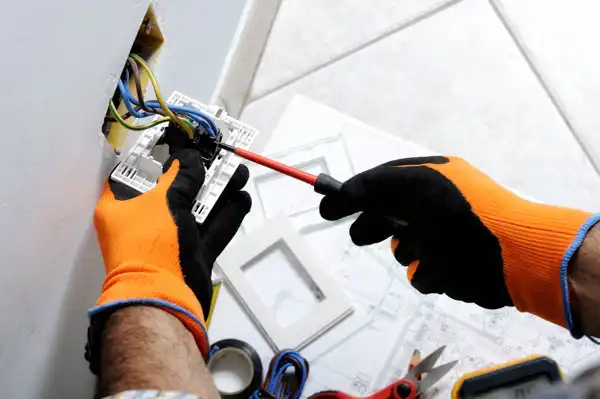
Electric water heaters, hybrid heat pump units, recirculation pumps, tankless controls, powered anode rods, condensate pumps, and smart monitoring devices all need proper electrical support. Some electric tankless systems require significant amperage, enough to make an older electrical panel stare into the middle distance.
Before choosing an electric tankless unit for a large household, have an electrician verify service capacity. Upgrading panels, adding circuits, or adjusting load calculations can change the project budget. It is better to learn that early than after the unit is mounted and everyone is admiring the most expensive wall ornament in the house.
Hybrid heat pump water heaters usually have more modest electrical requirements than whole-home electric tankless systems, but they still need correct circuits and installation conditions. They also produce condensate, so drainage must be planned. If the unit goes in a garage, basement, or utility space, details like floor slope, drain availability, and condensate pump reliability matter.
Lighting contractor work may sound unrelated, but in real mechanical rooms, visibility is part of serviceability. I have worked around water heaters tucked into dim corners where the only light source was a heroic spider web near a bare bulb. Good lighting helps technicians inspect valves, vents, leaks, labels, and wiring. Future you, holding a flashlight in your teeth, will appreciate it.
Signs your current water heater is losing the fight
A struggling water heater usually complains before it fails completely. The trick is listening before the complaint becomes a puddle.
Common warning signs include:
- Hot water runs out faster than it used to, even with the same routine.
- Water temperature swings from hot to lukewarm without clear reason.
- The tank makes rumbling, popping, or crackling noises.
- Rusty water, moisture around the base, or corrosion appears near fittings.
- Utility bills rise while hot water performance gets worse.
Some of these problems can be handled with water heater repair. A failed thermostat, heating element, gas control valve, igniter, dip tube, or expansion tank does not always mean full replacement. But age matters. If a tank is near or past its expected service life, repair costs should be weighed against replacement. Many tank-style water heaters last roughly 8 to 12 years, though water quality, maintenance, usage, and installation quality can shorten or extend that range. Tankless units can last longer with proper maintenance, but neglect and hard water can age them quickly.
Large families place heavier demand on equipment, so “it is only nine years old” may not mean what it means in a two-person household. Appliance years are like dog years when six people shower daily.
Installation details that separate a clean job from a future headache
A proper water heater installation is more than connecting pipes and posing for a receipt. The details protect the home.
The expansion tank must be sized and pressurized correctly if the plumbing system is closed or has a pressure-reducing valve or backflow prevention. Temperature and pressure relief valves must discharge safely. Drain pans and drain lines matter when the heater sits where leakage can damage finished spaces. Seismic strapping is required in some areas. Shutoff valves should be accessible. Unions and service clearances should make future maintenance possible without creative language.
For tankless systems, isolation valves allow flushing. Condensate neutralizers may be needed for condensing units. Vent terminations must be placed where exhaust will not create problems near windows, doors, soffits, or neighboring structures. Gas lines and regulators must be sized for maximum load, including other appliances.
For homes with recurring plumbing leak repair needs, it is wise to inspect surrounding piping during replacement. Old valves and brittle connections often fail when disturbed. That is not the installer “breaking” the plumbing. It is the plumbing confessing under questioning.
Drainage also deserves attention. Water heaters need occasional flushing, and relief valves need safe discharge routes. If floor drains are sluggish, drain cleaning may be needed before installation day. In stubborn cases, rooter service or hydrojetting may be appropriate, especially where older drain lines have buildup or roots. Nobody wants to discover during a tank flush that the floor drain is decorative.
Matching the system to the household, not the brochure
The best water heater choice depends on habits. A family with five short showers spread through the evening may do well with a different system than a family of five that compresses all bathing into a 40-minute morning stampede.
A few questions reveal a lot:
- How many showers or tubs may run at the same time?
- Is there a large soaking tub, multi-head shower, or body spray system?
- Does laundry run during peak shower times?
- How far are fixtures from the water heater?
- Is the home using gas, electric, propane, or considering efficiency upgrades?
That is one of only two lists here, because some questions deserve to stand still long enough to be answered. The rest belongs in conversation.
A house with teenage athletes, frequent guests, and a big tub might need a high-recovery gas tank or multiple tankless units. A home with solar panels and no gas service might lean toward a hybrid heat pump water heater. A rural home on propane may need careful fuel cost comparison and possibly a larger storage strategy. A home with a long ranch layout might benefit from recirculation more than sheer heater size.
There are also lifestyle choices. Some families are happy staggering showers. Others want everyone bathed, dressed, and out the door without a plumbing treaty. Comfort costs money. So does frustration. The right balance is personal.
What high demand does to maintenance
A water heater serving two people can often survive mild neglect longer than it deserves. A water heater serving a large family has less forgiveness in its heart.
Tank units should be inspected periodically for corrosion, valve condition, venting, leaks, and sediment. Flushing can help manage sediment, though results vary depending on water quality and how long buildup has been ignored. Anode rods protect steel tanks from corrosion and may need replacement, especially in aggressive water conditions. Powered anode rods can help in some cases, particularly where odor issues or rapid anode depletion occur.
Tankless units need descaling based on hardness and usage. Filters should be cleaned. Venting should be checked. Condensate drains and neutralizers should be maintained where applicable. Recirculation systems should be controlled properly and inspected for pump wear.
High-use homes should not wait until performance collapses. Preventive maintenance is cheaper than emergency replacement on a holiday weekend, when every supply house is closed and your guests are forming opinions.
When replacement becomes smarter than repair
Repair makes sense when the unit is relatively young, the issue is isolated, and the rest of the system is sound. Replacement makes more sense when the tank is old, leaking, badly corroded, inefficient, or undersized for the household.
A leaking storage tank almost always means replacement. Once the inner tank fails, there is no practical permanent repair. External leaks from fittings, valves, or connections may be repairable, but water at the base of the heater should be investigated promptly.
If a household has grown since the original installation, replacement is a chance to correct capacity. Maybe the 40-gallon tank worked when two adults bought the house. Add three kids, a mother-in-law suite, and a dishwasher that runs like it is training for a marathon, and the original heater is outmatched.
Major remodels are also good times to reassess. Adding bathrooms, installing a large tub, finishing a basement apartment, or upgrading fixtures can change hot water demand dramatically. It is much easier to plan water heater capacity during renovation than to fix it later through drywall archaeology.
The budget conversation nobody loves, but everyone needs
High-demand water heater installation costs vary widely. A straightforward tank replacement usually costs less than a tankless conversion, dual-unit setup, gas line upgrade, venting change, or hybrid installation requiring condensate routing and electrical work. Local labor rates, code requirements, equipment brand, warranty level, access difficulty, permits, and required upgrades all affect pricing.
Cheapest is not always cheapest. A low bid that ignores gas sizing, expansion control, venting, permits, or water quality can become expensive after the fact. On the other hand, the most elaborate system is not automatically the best. Some homes need a practical, robust tank. Others genuinely benefit from staged tankless units or hybrid technology.
The honest estimate should explain what is included. Equipment, labor, permit, disposal, code upgrades, valves, expansion tank, venting, drain pan, recirculation work, electrical changes, gas line modifications, and water treatment should not be vague mysteries. If the proposal reads like a fortune cookie, ask questions.
A real-world example from the trenches
One large household I remember had seven people, four bathrooms, a large tub, and a 50-gallon gas water heater. They complained that the heater was “broken” because hot water disappeared every morning. The heater was not broken. It was simply being asked to perform like a restaurant kitchen appliance while sized for a polite little bungalow.
Their morning routine had two showers running at once, then a third, with laundry starting halfway through because someone always needed a uniform. The far bathroom took nearly two minutes to get hot water, so gallons went down the drain before bathing even started. The tank had sediment, the recirculation line had been abandoned years earlier, and the gas line could not support a larger high-input heater without modification.
The solution was not one magic box. The home needed a properly sized high-recovery water heater, gas line correction, a controlled recirculation system, pipe insulation, and a water softener. Not the cheapest path, but after installation, the family stopped scheduling showers like airport runway slots. The heater did its job because the system finally matched the demand.
That is the part homeowners often miss. Water heating is a system. The appliance is the star, but the supporting cast can ruin the show.
Choosing the right contractor
For large-family water heater installation, hire someone who asks good questions before recommending equipment. If the contractor walks in, glances at the old tank, and says, “Same size?” without discussing usage, fixtures, fuel, venting, water quality, and future plans, keep your antenna up.
A qualified plumber should understand sizing, code, safety devices, pressure, expansion, recirculation, and maintenance. If the project involves gas changes, electrical upgrades, HVAC interactions, or equipment relocation, coordination with an electrician, heating contractor, air conditioning contractor, or gas installation service may be necessary. A good contractor knows when to bring in the right trade instead of pretending every problem can be solved with channel locks and optimism.
Local experience matters too. Water hardness, groundwater temperature, common plumbing materials, utility costs, permit requirements, and building layouts vary by region. A system that performs beautifully in one climate may underwhelm in another.
Hot water peace is possible
Large families do not have to live with shower negotiations, lukewarm tubs, and the dreaded shout from the bathroom, “Who used all the hot water?” But solving high demand takes more than buying the biggest tank that fits through the door.
The right water heater installation considers peak usage, recovery rate, fuel supply, electrical capacity, venting, plumbing layout, recirculation, water quality, safety, and maintenance. It may involve a large storage tank, tankless units, a hybrid heat pump model, dual heaters, or supporting upgrades like water softener installation and plumbing repiping. The answer should fit the household, not a sales script.
Hot water is one of those comforts people barely notice when it works. When it fails, it becomes the main character of the morning. With smart planning and a proper installation, even a house full of shower-loving, towel-dirtying, dishwasher-loading humans can stay comfortable.
And if the teenagers still take 25-minute showers, at least the plumbing will be ready. The water bill, however, may need counseling.
Name: Service Lion Plumbing Heating Air Electric
Address: 521 W Briardale Ave, Orange, CA 92865, United States
Phone: (657) 567-7305
Website: https://callservicelion.com/
Email: [email protected]
Hours:
Monday: Open 24 hours
Tuesday: Open 24 hours
Wednesday: Open 24 hours
Thursday: Open 24 hours
Friday: Open 24 hours
Saturday: Open 24 hours
Sunday: Open 24 hours
Open-location code: R48R+WV Orange, California, USA
Map/listing URL:
https://www.google.com/maps/search/?api=1&query=Google&query_place_id=ChIJQU4LBWHV3IARtnABtyykSA4
Google Map:
Socials:
https://www.facebook.com/ServiceLionCA/
https://www.youtube.com/channel/UCR_L35QzsRTxYZtX8PxJvPw
Local Service Information
Service Lion Plumbing Heating Air Electric provides plumbing, drain, heating, air conditioning, and electrical services from its Orange, California location.The company serves homeowners and properties throughout Orange and communities across Orange County and surrounding areas.
Available services include plumbing repairs, water heater work, drain and sewer services, heating and cooling service, electrical repairs, panels, lighting, outlets, and related home-system work.
Service is available for residential properties as well as light commercial needs described within the company's local service-area information.
The company's website emphasizes locally operated service, coordinated home-system support, and practical scheduling for plumbing, HVAC, and electrical needs.
The matching public business listing shows the Orange location as open 24 hours a day, seven days a week.
For service information or scheduling, call (657) 567-7305 or visit https://callservicelion.com/.
The public map listing identifies the business at 521 W Briardale Ave, Orange, CA 92865 and can be used for location and direction information.
Popular Questions About Service Lion Plumbing Heating Air Electric
What services does Service Lion Plumbing Heating Air Electric provide?
The company provides plumbing, drain and sewer, heating, air conditioning, and electrical services. Its published services include plumbing repair, water heaters, drain clearing, sewer work, HVAC repair and installation, electrical repairs, panels, circuit breakers, lighting, outlets, and related services.
Where is Service Lion Plumbing Heating Air Electric located?
The matching business location is 521 W Briardale Ave, Orange, CA 92865, United States.
What areas does Service Lion Plumbing Heating Air Electric serve?
The company serves Orange County and surrounding communities. Its published service-area information includes Orange, Anaheim, Brea, Yorba Linda, Fullerton, Huntington Beach, Newport Beach, Costa Mesa, Irvine, Lake Forest, and additional nearby cities.
Is Service Lion Plumbing Heating Air Electric open 24 hours?
The matching public business listing shows the location as open 24 hours on Monday through Sunday.
Does Service Lion Plumbing Heating Air Electric work on drains and sewer lines?
Yes. Published services include drain clearing, rooter service, camera inspection, hydro jetting, sewer line repair and installation, water line work, slab leak detection, and trenchless sewer line repair.
Does Service Lion Plumbing Heating Air Electric provide heating and air conditioning service?
Yes. Its published HVAC services include air conditioning repair and installation, heating service, furnace work, heat pumps, air ducts, indoor air quality assessments, and thermostat installation.
Does Service Lion Plumbing Heating Air Electric provide electrical service?
Yes. Published electrical services include repairs and installations, electrical panels, circuit breakers, safety inspections, lighting, outlets and switches, surge protection, generators, and EV charging equipment installation.
How can I contact Service Lion Plumbing Heating Air Electric?
Call (657) 567-7305.
Email: [email protected]
Website: https://callservicelion.com/
Facebook: https://www.facebook.com/ServiceLionCA/
Landmarks Near Orange, California
Old Towne Orange Historic District
A central historic district and useful geographic reference point for the Orange community.
Plaza Park
A well-known public gathering point in the center of Old Towne Orange.
Orange Public Library & History Center
A civic landmark serving residents near central Orange.
Hart Park
A major public park and recreation area south of central Orange.
Eisenhower Park
A public park serving neighborhoods in northern Orange.
Santiago Oaks Regional Park
A regional recreation and open-space landmark on the eastern side of Orange.
Irvine Regional Park
A large regional park and recognizable reference point east of the city.
Orange Park Acres
A distinctive residential community and service-area reference point in eastern Orange.
El Modena
An established Orange neighborhood that provides a practical local coverage reference.
Glassell Street
One of the city's principal north-south streets and a useful route through central Orange.
Lincoln Avenue
A major east-west roadway serving northern Orange and nearby communities.
State Route 55
A primary regional freeway connecting Orange with other parts of Orange County.