Lighting Contractor Services and Electrical Work Explained
A lighting contractor lives in that oddly glamorous corner of the trades where wires, fixtures, safety, comfort, and aesthetics all sit at the same crowded lunch table. The work looks simple from the ground. A light is out, a fixture needs replacing, a room feels like a cave, the parking lot has the mood of a mystery novel. Then someone opens the panel, checks the circuit, looks at the ceiling layout, and suddenly everyone remembers electricity is not a hobby. It is a skilled trade with consequences.
Lighting work is often discussed as if it floats by itself, separate from the rest of a building’s mechanical life. In practice, it overlaps with electrical work, HVAC equipment, plumbing access, renovation planning, and the eternal question of why the switch by the door controls absolutely nothing useful. A Lighting contractor may work closely with an Electrician, and on some jobs those roles are handled within the same qualified electrical service operation. On larger projects, lighting may be one specialized slice of a wider construction or service plan that also involves a Heating contractor, Air conditioning contractor, Plumber, or other trades.
The important part is knowing where lighting service ends, where broader electrical work begins, and when another trade has to step in before the ceiling becomes an expensive guessing game.
What a lighting contractor actually does
A Lighting contractor handles the planning, installation, service, repair, and maintenance of lighting systems. That may include indoor lighting, exterior lighting, task lighting, security lighting, commercial fixture upgrades, lighting controls, and the electrical connections that make all of it behave like grown-up equipment rather than a temperamental table lamp.
The work can be as modest as replacing outdated fixtures with safer, more efficient units, or as involved as coordinating lighting with a building renovation where ceiling layouts, equipment clearances, controls, and service access all matter. Lighting is not just decoration. It affects visibility, comfort, safety, maintenance access, and how people move through a space. A badly lit mechanical room turns a simple filter change into a flashlight circus. A poorly planned retail space makes good products look like they were photographed in a basement. A dim exterior entryway makes visitors hesitate before they even reach the door.
Electrical competence sits underneath all of it. A fixture is only the visible part. Behind it are circuits, wiring methods, switch legs, controls, load considerations, and code requirements. That is where a qualified Electrician becomes essential. In many cases, lighting contractors either employ electricians, subcontract electrical work to licensed electricians, or operate as electrical contractors with lighting specialization. The label matters less than the qualifications. The electricity does not care what the business card says.
Electrical work is not “just hooking it up”
There is a phrase that has caused more trouble than a dripping ceiling: “Can you just hook it up?” It sounds innocent. It usually means someone has purchased a fixture, device, or piece of equipment and hopes the final step will be quick, cheap, and magically simple.
Electrical work is rarely just hooking something up. It starts with whether the existing circuit is suitable, whether the wiring is in acceptable condition, whether grounding is present, whether the fixture is appropriate for the location, and whether the controls are compatible. If the work touches HVAC equipment, the coordination becomes even more important. Heating, ventilation, and air-conditioning contractors specialize in installing and maintaining heating, ventilation, and air-conditioning equipment. Their services can include installation, maintenance, repairs, duct cleaning, and the plumbing or electrical work associated with heating and cooling equipment.
That last part matters. An Air conditioning contractor or Heating contractor may need electrical connections for a unit, controls, disconnects, or related components. A lighting project in a ceiling crowded with ductwork, refrigeration lines, or access panels can quickly become a coordination job. Nobody wins when a beautiful new fixture blocks access to equipment that needs Air conditioning maintenance twice a year.
Electrical work also has its own trade classification, separate from plumbing, heating, and air-conditioning. Plumbing, heating, and air-conditioning sit together as special trade contractor work, while electrical work is recognized separately. That separation reflects reality on the job. A Plumber may be excellent at Plumbing leak repair, Drain cleaning, Rooter service, Hydrojetting, Water heater repair, Water heater installation, Plumbing repiping, Water softener installation, or Septic system service, but that does not make them the right person to rework a lighting circuit. Likewise, the sharpest Electrician in the room is not automatically the person you want sizing a heat pump or diagnosing a sewer line. Good contractors know where their lane ends. Great ones know when to call the next truck.
Where lighting meets HVAC
Lighting and HVAC share more space than people expect. Commercial ceilings are prime real estate. Above those tiles or finished surfaces, you may find ductwork, electrical conduits, refrigerant lines, plumbing lines, fire protection components, and access points for service. Every trade wants a clean path. The ceiling, unfortunately, is not getting any bigger.
HVAC contractors are specialized contractors whose core work includes installing and maintaining heating, ventilation, and air-conditioning equipment. Their world includes air conditioners, heat pumps, furnaces, ventilation equipment, and related systems. Work may include Air conditioning repair, Air conditioning maintenance, an Air conditioning tune-up, Furnace repair service, Heat pump installation, and the electrical or plumbing work associated with heating and cooling equipment.
Lighting can affect that work in practical ways. A row of recessed fixtures may interfere with duct placement. A new lighting control layout may need to avoid equipment access panels. Exterior lighting may be installed near mechanical units that require clearance for service. Even a simple ceiling fixture replacement can become awkward if it sits beneath a service path used by an Air conditioning repair service.
The best jobs are planned with the ceiling treated like a shared workspace, not a junk drawer. If lighting is designed after HVAC, the contractor needs to understand what must remain accessible. If HVAC is replaced after lighting, the Heating contractor or Air conditioning contractor may need to work around existing fixtures and wiring. Coordination is not glamorous, but neither is paying someone to undo yesterday’s work.
Air conditioners, heat pumps, and the electrical side of comfort
Air conditioners and other refrigeration equipment fall under the category of appliances in the regulatory language used for refrigerant-related service. Technicians involved in maintenance, service, or repair can include installers and contractor employees. That means the people working on Air conditioning repair or Heat pump installation are operating within a specialized world that has its own rules and responsibilities.
From the homeowner or building owner’s viewpoint, the electrical connection may look like the easy part. The unit arrives, the crew sets it, the wiring gets connected, the system runs. But proper HVAC installation is not just placement and power. Quality installation includes correct equipment sizing and proper refrigerant charging. Proper charging of an air conditioner or heat pump can reduce energy consumption and lower the risk of failure. That is not a decorative detail. It is central to whether the equipment works as intended.
So where does a lighting or electrical contractor fit? They may be responsible for the electrical work associated with the equipment, while the HVAC contractor handles the heating and cooling system itself. On some service calls, one company may have qualified staff for both. On others, coordination between trades is the sane choice. The point is not to collect contractors like souvenir mugs. The point is to have each skilled person do the work they are qualified to do.
A lighting upgrade in a mechanical room, for example, can make HVAC service safer and more efficient because technicians need to see what they are doing. But replacing the light https://www.mapquest.com/us/california/service-lion-plumbing-heating-air-electric-430359340 does not qualify the lighting contractor to perform an Air conditioning tune-up. By the same logic, an HVAC technician servicing a unit may handle electrical work associated with that equipment, but that does not mean they are redesigning the building’s lighting plan. The overlap is real. The boundaries still matter.
The quiet importance of maintenance lighting
Service spaces deserve better lighting than they usually get. If you have ever watched a technician balance a flashlight under one chin while trying to read a label, you have seen poor lighting tax at work. It slows the job, increases frustration, and turns small issues into longer visits.
Mechanical rooms, utility closets, basements, garages, and exterior equipment areas need practical illumination. Not theatrical. Not moody. Practical. The goal is to let a technician inspect equipment, read markings, access shutoffs, and work without turning the place into a shadow puppet show. This applies whether the service call is for Furnace repair service, Water heater repair, Gas installation service, or Air conditioning repair.
Lighting contractors who understand service environments think about visibility from the worker’s point of view. Where will someone stand? What panel needs to open? Which side of the unit gets serviced? Is the fixture placed where a ladder can actually reach it? Will the light be blocked by a door, duct, or pipe? These are not academic questions. They decide whether the next maintenance call is smooth or sprinkled with muttering.
For commercial properties, exterior lighting has similar practical value. Areas around equipment, service entrances, parking areas, and pathways need enough visibility for safe movement and work. A lighting contractor may focus on fixture placement and electrical service, while other contractors handle the equipment being illuminated. The work is connected, even when the contracts are separate.
The contractor alphabet soup, decoded without a sedative
The trades have a naming problem. Not because the names are wrong, but because several of them overlap at the edges. A customer sees a building problem. Contractors see categories of work, licenses, classifications, specialties, and sometimes a panel schedule written in handwriting that belongs in a museum of mysteries.
Here is the short version, mercifully compact:
- A Lighting contractor focuses on lighting systems, fixtures, controls, and related installation or service.
- An Electrician handles electrical wiring, circuits, panels, connections, and other electrical work within their qualifications.
- An Air conditioning contractor or Heating contractor specializes in HVAC equipment installation, maintenance, and repair.
- A Plumber handles plumbing repair, water heaters, piping, drains, sewer-related work, and related systems.
- Some projects require more than one trade because buildings refuse to organize themselves around one invoice.
That overlap is normal. HVAC work can include electrical and plumbing tasks associated with heating and cooling equipment. Plumbing, heating, and air-conditioning are commonly grouped as special trade contractor work, and that category includes air-conditioning work, furnace repair, heating equipment installation, plumbing repair, refrigeration and freezer work, sewer hookups, sump pump service, and water pump installation. Electrical work is a separate classification. So yes, trades may cooperate. No, that does not mean everyone does everything.
Lighting controls: where convenience meets complaints
Lighting controls are the part of the project most likely to inspire strong opinions from people who never cared about lighting before. Switches, sensors, dimmers, timers, and control zones decide how a space feels in daily use. Get them right and nobody talks about them. Get them wrong and the break room becomes a debate club.
Controls need to match the purpose of the space. A storage room may benefit from simple automatic control so lights are not left on after someone grabs a box and flees. A conference room may need dimming or separate zones. A mechanical space usually needs dependable manual control and clear visibility. Exterior lighting may need scheduling or other control strategies, depending on the property and usage.
The electrical side matters because controls must be compatible with the fixtures and wiring. A dimmer that does not suit the installed lighting can cause flicker, poor performance, or premature component trouble. A sensor placed without regard to how people actually move through a room can shut lights off at the worst moment. The room has not become haunted. It has been poorly planned.
A good lighting contractor asks annoying but useful questions. Who uses this space? When? For how long? Does anyone work here at a desk, carry tools, move carts, service equipment, or need both hands free? The answers shape the lighting layout far better than guessing from a floor plan.
When lighting work should trigger a broader electrical review
Not every fixture replacement needs a grand investigation. Sometimes a light is old, a replacement is appropriate, and the job is straightforward. But certain signs suggest the lighting request may be only the visible tip of a larger electrical issue.
Flickering across multiple fixtures, repeated breaker trips, warm switches, damaged wiring, unreliable controls, or fixtures installed in unsuitable locations all deserve closer attention from a qualified Electrician. Electrical systems age, renovations leave behind surprises, and previous work is not always a monument to craftsmanship. Occasionally, it is more of a cautionary tale with wire nuts.
Renovations are another trigger. If walls or ceilings are already open, it may be the right time to correct lighting layout problems, improve service lighting, or coordinate with HVAC and plumbing changes. Waiting until everything is closed, painted, and admired is a fine way to turn a reasonable adjustment into a dusty regret.
This is especially true when mechanical equipment is involved. A new Heat pump installation, Water heater installation, or furnace replacement may change access needs, equipment placement, or service requirements. Lighting should support the new layout. If it does not, someone will eventually be working in the dark next to expensive equipment, which is rarely the start of a good story.
Plumbing, HVAC, and electrical work under one roof
Some service businesses offer more than one trade. You may see a company provide Plumbing leak repair, Drain cleaning, Rooter service, Hydrojetting, Water heater repair, Water heater installation, Air conditioning repair, Air conditioning maintenance, Furnace repair service, and electrical work through qualified staff. That can be convenient for property owners because one call may coordinate several related tasks.
Convenience, however, is not the same as interchangeability. A multi-trade contractor still needs the right technician for the right task. If a drain line backs up, the Rooter service technician is not there to redesign a lighting circuit. If a lighting control fails, the Electrician is not there to perform septic work. If the air conditioner is underperforming, an Air conditioning repair service should evaluate the equipment, refrigerant-related service needs, maintenance condition, and installation factors within their scope.
The strongest multi-trade companies tend to respect specialization. They know that plumbing, heating, air-conditioning, and electrical work may share walls and ceilings, but they do not share the same skill set in every detail. The advantage is coordination. The risk, when done badly, is blurred responsibility. A good contractor makes clear who is doing what.
The customer’s role, small but surprisingly powerful
Customers do not need to become electricians, HVAC technicians, or plumbers. Please do not spend your weekend trying to become all three on video platforms. What helps is giving clear information and noticing patterns.
If you call about lighting, mention whether the issue affects one fixture, one room, or multiple areas. Say whether breakers have tripped, whether the problem began after other work, and whether HVAC, plumbing, or renovation work recently occurred nearby. If a technician is coming for Air conditioning maintenance and the service area has poor lighting, mention that too. It may not be the main repair, but it affects access and efficiency.
For planned projects, share the real use of the space, not just the pretty version. If a garage doubles as a workshop, storage room, laundry zone, and occasional cardboard recycling empire, say so. If a mechanical room is accessed often for Water heater repair, filter changes, or furnace service, lighting should reflect that. Buildings are used by humans, and humans are famously bad at standing exactly where the blueprint imagined.
A practical way to think before you hire
Before hiring for lighting or electrical work, it helps to sort the problem into its nearest trade without pretending the borders are made of stone. If the issue is a fixture, control, circuit, or wiring concern, start with a qualified lighting or electrical contractor. If the issue is cooling performance, heating performance, refrigerant-related service, furnace operation, or a heat pump, start with an HVAC contractor. If the issue is piping, drains, water heaters, sewer connections, or leaks, start with a Plumber.
A small decision guide can keep the first phone call pointed in the right direction:
- Lights flicker, switches fail, fixtures need replacement, or circuits seem unreliable: call a Lighting contractor or Electrician.
- The air conditioner does not cool properly, needs service, or is due for an Air conditioning tune-up: call an Air conditioning contractor.
- The furnace, heater, or heat pump needs service or replacement planning: call a Heating contractor.
- Water leaks, drains clog, pipes fail, or the water heater acts up: call a Plumber.
- More than one system is affected, especially during renovation: ask for coordinated service or referrals among qualified trades.
That is not a legal map of every possible situation. It is a practical starting point. The contractor you call should be willing to say, “That part needs another trade,” without acting as if the sentence causes physical pain.
What proper installation really means
People often judge installation by whether the system turns on. That is a low bar. A raccoon can turn things on if given enough buttons and privacy.
Proper installation means the work suits the equipment, the space, and the intended use. For HVAC, quality installation includes correct equipment sizing and proper refrigerant charging for air conditioners and heat pumps. Those details affect energy consumption and the risk of failure. For lighting, proper installation means fixtures and controls are correctly selected, safely connected, placed where they serve the space, and coordinated with the surrounding building systems.
For plumbing, proper work means repairs, installations, drain service, repiping, or water treatment equipment are handled within the right scope. A Water softener installation is not the same job as Hydrojetting. Plumbing repiping is not Drain cleaning with a more ambitious hat. Each service has its own requirements.
The same principle applies across trades. “It works” is the beginning of evaluation, not the end. Does it work safely? Does it work efficiently? Can it be maintained? Does it interfere with other systems? Can the next technician access what they need without dismantling half the room? These questions separate durable work from short-term theatrics.
The funny thing about cheap work
Cheap work has a talent for becoming expensive later. Lighting installed without thought to access can cost time on every future service call. HVAC equipment installed without proper sizing or refrigerant charging can consume more energy and face higher failure risk. Plumbing repairs done as patches when replacement is warranted can lead to repeat leaks. Electrical shortcuts can create safety concerns that no discount justifies.
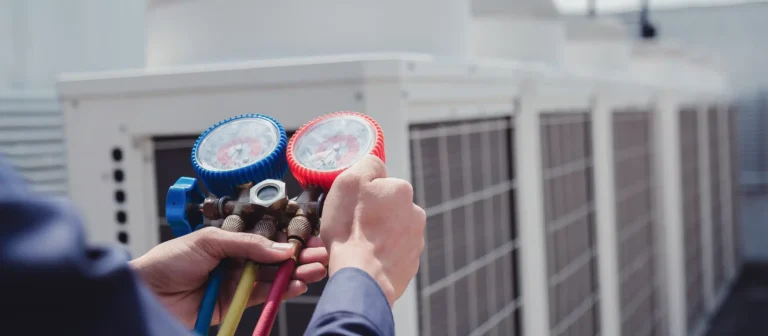
That does not mean the highest bid is automatically best. It means the scope matters. A contractor who explains the work clearly, identifies trade boundaries, and points out coordination issues may look less “cheap” on paper because they are including reality in the price. Reality is annoying that way. It always shows up eventually, often holding a change order.
A good lighting contractor will not just ask what fixture you bought. They will ask where it is going, what controls it, what circuit serves it, what the space needs, and whether anything nearby must remain accessible. A good Electrician will care about the hidden parts. A good HVAC contractor will care about sizing, charging, installation quality, maintenance, and repairs. A good Plumber will care about the system, not just the puddle.
The best projects feel uneventful afterward
The highest compliment for lighting and electrical work is not dramatic applause. It is silence. The lights work. The switches make sense. The mechanical room is visible. The HVAC technician can reach the unit. The Plumber can access the water heater. The exterior service area is not lit like a stage production, but nobody has to guess where the walkway is. People stop thinking about it because it supports the building properly.
That uneventful result takes planning. It takes respect for trade boundaries. It takes a Lighting contractor who understands that fixtures live in a larger ecosystem, an Electrician who treats safety and function as inseparable, an Air conditioning contractor who knows the importance of proper installation and maintenance, and a Plumber who handles water, drains, and piping without pretending electrical panels are a side quest.
Buildings are bundles of systems pretending to be walls, ceilings, and floors. Lighting makes those systems usable. Electrical work powers them. HVAC keeps people comfortable. Plumbing keeps water where it belongs, which is an underrated miracle until it stops happening. The best contractors understand how their piece fits the rest, and the best customers hire accordingly.
So when the next lighting project comes up, whether it is a fixture replacement, a service-area upgrade, a renovation, or part of a larger HVAC or plumbing job, do not treat it as decoration with wires. Treat it as electrical work with a purpose. Your future self, standing in a well-lit room Plumber while everything simply works, will appreciate the lack of drama. And frankly, buildings could use a little less drama.
Name: Service Lion Plumbing Heating Air Electric
Address: 521 W Briardale Ave, Orange, CA 92865, United States
Phone: (657) 567-7305
Website: https://callservicelion.com/
Email: [email protected]
Hours:
Monday: Open 24 hours
Tuesday: Open 24 hours
Wednesday: Open 24 hours
Thursday: Open 24 hours
Friday: Open 24 hours
Saturday: Open 24 hours
Sunday: Open 24 hours
Open-location code: R48R+WV Orange, California, USA
Map/listing URL:
https://www.google.com/maps/search/?api=1&query=Google&query_place_id=ChIJQU4LBWHV3IARtnABtyykSA4
Google Map:
Socials:
https://www.facebook.com/ServiceLionCA/
https://www.youtube.com/channel/UCR_L35QzsRTxYZtX8PxJvPw
Local Service Information
Service Lion Plumbing Heating Air Electric provides plumbing, drain, heating, air conditioning, and electrical services from its Orange, California location.The company serves homeowners and properties throughout Orange and communities across Orange County and surrounding areas.
Available services include plumbing repairs, water heater work, drain and sewer services, heating and cooling service, electrical repairs, panels, lighting, outlets, and related home-system work.
Service is available for residential properties as well as light commercial needs described within the company's local service-area information.
The company's website emphasizes locally operated service, coordinated home-system support, and practical scheduling for plumbing, HVAC, and electrical needs.
The matching public business listing shows the Orange location as open 24 hours a day, seven days a week.
For service information or scheduling, call (657) 567-7305 or visit https://callservicelion.com/.
The public map listing identifies the business at 521 W Briardale Ave, Orange, CA 92865 and can be used for location and direction information.
Popular Questions About Service Lion Plumbing Heating Air Electric
What services does Service Lion Plumbing Heating Air Electric provide?
The company provides plumbing, drain and sewer, heating, air conditioning, and electrical services. Its published services include plumbing repair, water heaters, drain clearing, sewer work, HVAC repair and installation, electrical repairs, panels, circuit breakers, lighting, outlets, and related services.
Where is Service Lion Plumbing Heating Air Electric located?
The matching business location is 521 W Briardale Ave, Orange, CA 92865, United States.
What areas does Service Lion Plumbing Heating Air Electric serve?
The company serves Orange County and surrounding communities. Its published service-area information includes Orange, Anaheim, Brea, Yorba Linda, Fullerton, Huntington Beach, Newport Beach, Costa Mesa, Irvine, Lake Forest, and additional nearby cities.
Is Service Lion Plumbing Heating Air Electric open 24 hours?
The matching public business listing shows the location as open 24 hours on Monday through Sunday.
Does Service Lion Plumbing Heating Air Electric work on drains and sewer lines?
Yes. Published services include drain clearing, rooter service, camera inspection, hydro jetting, sewer line repair and installation, water line work, slab leak detection, and trenchless sewer line repair.
Does Service Lion Plumbing Heating Air Electric provide heating and air conditioning service?
Yes. Its published HVAC services include air conditioning repair and installation, heating service, furnace work, heat pumps, air ducts, indoor air quality assessments, and thermostat installation.
Does Service Lion Plumbing Heating Air Electric provide electrical service?
Yes. Published electrical services include repairs and installations, electrical panels, circuit breakers, safety inspections, lighting, outlets and switches, surge protection, generators, and EV charging equipment installation.
How can I contact Service Lion Plumbing Heating Air Electric?
Call (657) 567-7305.
Email: [email protected]
Website: https://callservicelion.com/
Facebook: https://www.facebook.com/ServiceLionCA/
Landmarks Near Orange, California
Old Towne Orange Historic District
A central historic district and useful geographic reference point for the Orange community.
Plaza Park
A well-known public gathering point in the center of Old Towne Orange.
Orange Public Library & History Center
A civic landmark serving residents near central Orange.
Hart Park
A major public park and recreation area south of central Orange.
Eisenhower Park
A public park serving neighborhoods in northern Orange.
Santiago Oaks Regional Park
A regional recreation and open-space landmark on the eastern side of Orange.
Irvine Regional Park
A large regional park and recognizable reference point east of the city.
Orange Park Acres
A distinctive residential community and service-area reference point in eastern Orange.
El Modena
An established Orange neighborhood that provides a practical local coverage reference.
Glassell Street
One of the city's principal north-south streets and a useful route through central Orange.
Lincoln Avenue
A major east-west roadway serving northern Orange and nearby communities.
State Route 55
A primary regional freeway connecting Orange with other parts of Orange County.