Heat Pump Installation and Quality HVAC Practices
Heat pump installation is one of those jobs that looks deceptively simple from the sidewalk. A box outside, an air handler or furnace connection inside, a thermostat on the wall, a few tidy lines, and suddenly everyone is an expert. The trouble is that heating and cooling systems do not run on good intentions. They run on sizing, airflow, refrigerant charge, electrical connections, compatible components, safe work habits, and a contractor who knows when a “quick swap” is actually a future service call wearing a fake mustache.
A good heat pump installation is not just an equipment changeout. It is HVAC work in the full professional sense: heating, ventilation, and air conditioning handled by specialized contractors whose job is to install, maintain, and repair comfort systems. That sounds plain enough, but the quality difference between “installed” and “installed correctly” can show up for years in energy use, comfort complaints, compressor failures, nuisance breakdowns, and the kind of indoor noise that makes homeowners start giving the outdoor unit a nickname.
The best HVAC practices are not glamorous. Nobody throws a parade because the refrigerant charge is correct. No neighbor walks over and says, “Beautiful equipment sizing, Dave.” But these details are where the real value lives.
The heat pump is not a magic box
A heat pump is part of the broader family of heating, ventilation, and air conditioning equipment. Like air conditioners and other refrigeration equipment, it depends on refrigeration principles and proper service practices. That means technicians who install, maintain, service, or repair these systems are not just moving sheet metal and tightening screws. They are working on regulated appliances, handling components where correct procedure matters, and making decisions that affect efficiency and reliability.
That is why quality installation starts before the new equipment arrives. A responsible heating contractor or air conditioning contractor does not treat the old unit’s size as gospel. The old system may have been oversized, undersized, poorly matched, or installed under different building conditions. Maybe insulation changed. Maybe windows were replaced. Maybe a room addition was connected to the system with all the engineering elegance of a garden hose taped to a trumpet. The installer has to look at the whole setup, not just the nameplate.
ENERGY STAR guidance emphasizes two points that should be tattooed on the inside of every HVAC service van: proper equipment sizing and proper refrigerant charging. Get those wrong and the owner can end up paying twice, first through installation cost and then through energy waste, comfort problems, and premature failure risk. A heat pump can be efficient, but efficiency is not sprinkled on at the factory like seasoning. It has to survive the installation.
Sizing: where comfort is won or quietly sabotaged
Oversized equipment is common enough that many technicians can recognize the symptoms before they take the panel off. The system starts, blasts conditioned air, shuts off too soon, then repeats the routine like a nervous stage actor. Short cycles can hurt comfort because the system does not run long enough to condition the home evenly. Undersized equipment has the opposite flavor of misery: long run times, rooms that never quite recover, and an owner standing under a supply register with the expression of someone waiting for a bus that was canceled last Tuesday.
Correct sizing is not a decoration on the proposal. It is central to the job. A heat pump must match the heating and cooling demands of the space it serves. The right size supports better comfort and helps the equipment operate as intended. The wrong size can make even a high-quality machine look lazy, dramatic, or both.
This is where the seasoned contractor earns their coffee. They ask questions. They look at the building. They consider whether the ductwork can support the equipment. They do not simply say, “The last one was three tons, so here comes another three tons,” unless there is a defensible reason. Replacing like-for-like might be appropriate in some cases, but it should never be automatic. Automatic is for thermostats, not judgment.
Refrigerant charge: small detail, big consequences
Proper refrigerant charging is one of the least visible parts of heat pump installation, and also one of the most important. ENERGY STAR notes that correct refrigerant charging in an air conditioner or heat pump can reduce energy consumption and lower the risk of failure. That is not sales glitter. It is practical field reality.
Too little or too much refrigerant can cause the system to operate outside its intended conditions. The owner may notice poor comfort, longer run times, or repeated need for air conditioning repair. The contractor may see symptoms that point to improper charge, airflow trouble, or installation conditions that were never handled correctly. Either way, the system is not getting a fair chance.
A professional air conditioning repair service knows that refrigerant is not a “top it off and roll” item. The phrase sounds convenient, like adding cream to coffee, but HVAC systems are not coffee. A technician needs to diagnose the situation, service the equipment properly, and respect the requirements that come with working on refrigeration appliances. Installers and contractor employees involved in maintenance, service, and repair fall into that world of responsibility. The charge has to be right, not close enough for a shrug.
The contractor matters as much as the equipment
There is a reason HVAC contractors are described as specialized contractors. Their core business is installing and maintaining heating, ventilation, and air-conditioning equipment. That specialization matters because heat pump installation is rarely isolated from other building systems. HVAC work can include installation, maintenance, repairs, duct cleaning, and the plumbing or electrical work associated with heating and cooling equipment.
That overlap is where many jobs get interesting. Not fun-interesting, like finding twenty dollars in a jacket. More like “why is there a mystery wire in this wall” interesting. A heat pump installation may require coordination with an electrician for electrical work, or with a plumber if related plumbing issues affect nearby systems. A gas installation service may be involved on properties where gas-fired equipment exists alongside heat pump equipment. A furnace repair service may be part of the conversation when a home uses a Plumber furnace in the same comfort strategy or when existing heating equipment must be evaluated.
Good contractors do not pretend every trade is the same. OSHA classifies plumbing, heating, and air-conditioning work as special trade contracting, while electrical work is separately classified. That distinction is not bureaucratic trivia. It reflects the real-world fact that different systems require different training, tools, and responsibilities. When a company offers multiple services, it needs qualified people for the work being performed. A wrench, a meter, and a confident polo shirt do not automatically make someone competent across every trade.
The quiet importance of air conditioning maintenance
Heat pump owners sometimes think maintenance is optional because the system is new. This is understandable, in the same way it is understandable that people believe they will floss every day after a stern dentist visit. New equipment still needs care. Air conditioning maintenance and heat pump maintenance help keep the system operating as intended and give technicians a chance to catch small issues before they become expensive theater.
An air conditioning tune-up is not supposed to be a ceremonial filter glance followed by a sticker on the equipment. It should involve meaningful checks related to system operation. Because quality HVAC practice includes maintenance and repairs, a tune-up belongs to the same professional discipline as installation. The goal is to preserve performance, reduce avoidable strain, and spot conditions that might lead to repair.
For heat pumps, maintenance has an extra layer of importance because the equipment may serve both heating and cooling needs. That means more seasonal workload than a cooling-only system in many applications. A neglected system does not become noble because it works year-round. It just becomes neglected with a busier calendar.
Here is a simple homeowner-facing way to think about the difference between installation, maintenance, and repair:
| Service type | What it means in practice | Why it matters | |---|---|---| | Heat pump installation | Selecting, placing, connecting, and setting up equipment correctly | Sizing and charge affect energy use, comfort, and failure risk | | Air conditioning maintenance | Routine service to support proper operation | Helps preserve performance and catch issues early | | Air conditioning repair | Diagnosing and fixing equipment problems | Restores function and addresses faults that maintenance may uncover | | Furnace repair service | Repairing existing heating equipment where applicable | Important when furnace systems remain part of the building’s comfort setup | | Electrical or plumbing support | Trade work associated with heating and cooling equipment | Keeps related systems handled by the right professionals |
Tables are not usually charming, but that one does save us from a paragraph with too many commas pretending to be organized.
Ducts, airflow, and the art of not blaming the machine
A heat pump can be correctly sized and properly charged, then still perform poorly if the air side of the system is wrong. The verified industry guidance includes ventilation as part of HVAC for a reason. Air must move where it is supposed to move, in the volume the equipment needs, through a system that can support it.
Duct cleaning is one of the services that can fall within HVAC contractor work, but airflow quality is bigger than cleanliness alone. A contractor must look at whether the installed equipment can operate properly with the existing distribution system. If the system cannot move air effectively, the owner may hear noise, feel weak airflow, or experience uneven temperatures. The machine outside gets blamed because it is visible, while the duct system hides in attics, basements, walls, and the contractor’s nightmares.
This is where quality practices beat equipment worship. Some people shop heat pumps as if buying a luxury blender. They compare brands, ratings, and features, then forget that a premium unit connected to a poor installation can behave like a racehorse pulling a shopping cart. The system matters. The installation matters. The air path matters.
When plumbing and HVAC share the same address
Plumbing and HVAC often live close together in service businesses because buildings do not care about trade categories when they decide to misbehave. A contractor may handle plumbing repair, heating equipment installation, air-conditioning work, sewer hookups, sump pump service, or water pump installation under the broader plumbing, heating, and air-conditioning category. That does not mean every heat pump job needs plumbing work, but it does mean the trades frequently intersect in real service operations.
A plumber may be called for plumbing leak repair near mechanical equipment. Drain cleaning or rooter service may be needed elsewhere in the property and have nothing to do with the heat pump at all, except that the same service company may offer both. Hydrojetting belongs in the drain and sewer service lane, air conditioning service contractor not the refrigerant circuit, thank goodness. Water heater repair and water heater installation often sit beside HVAC work in a contractor’s service menu because both involve mechanical systems that affect comfort and daily function. Plumbing repiping and water softener installation are different tasks again, but they show how wide the service umbrella can become.
The trick is not to mash all these services into one vague bucket labeled “home stuff.” Quality practice means sending the right person for the right job. A septic system service technician and an air conditioning repair technician may both save a homeowner’s day, but they are not interchangeable unless your business model is chaos with invoices.
Electrical work deserves its own respect
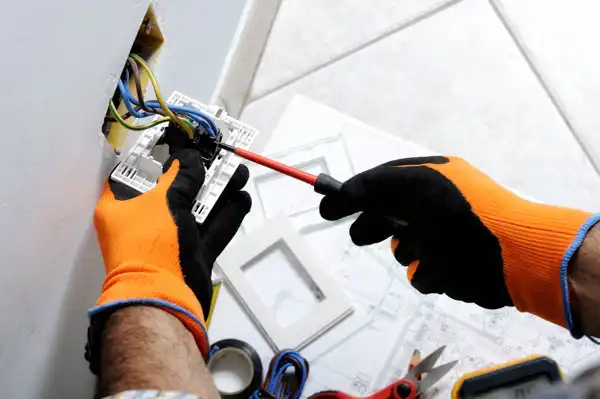
Electrical work is separately classified from plumbing, heating, and air-conditioning work, and that distinction deserves respect on heat pump installations. Heat pumps require electrical connections and controls, but not every HVAC technician is an electrician, and not every electrician is an HVAC technician. There is overlap in associated work, but competence has boundaries.
A good installation company knows how to manage that boundary. If the job requires electrical expertise beyond the HVAC scope, an electrician should be involved. If lighting contractor work is needed on the property, that is a different service category again. The homeowner may see all wires as “electric,” but professionals know the difference between control wiring, equipment circuits, lighting work, and the many ways a bad connection can ruin everyone’s afternoon.
The thermostat is a small device with an inflated sense of importance, and, annoyingly, it often deserves it. Controls must match the system strategy. A heat pump installation can be undermined by poor control setup, confusing operation, or wiring that makes the system behave like it has stage fright. The best practice is simple to say and harder to execute: make the equipment, controls, and associated electrical work agree with one another.
The repair call that starts at installation
A surprising number of service calls are installation calls in disguise. The owner reports poor cooling, weak heating, or repeated faults. The air conditioning repair service arrives and discovers that the equipment was not charged properly, was not sized appropriately, or was connected to a system that could not support it. The repair technician becomes an archaeologist, brushing dust off past decisions and muttering things unsuitable for company brochures.
This is why installation quality is not a luxury. It is a form of future repair prevention. Proper refrigerant charging can reduce energy consumption and lower failure risk. Proper sizing supports intended operation. Professional maintenance keeps the system from drifting unnoticed. None of these practices guarantee a system will never fail, because machines are machines and entropy has never missed a day of work. But they reduce avoidable trouble.
Customers often ask whether they should repair or replace. The honest answer depends on the equipment, the fault, the age, the performance, and the cost. Since this discussion is grounded in installation and quality practice rather than a fabricated pricing chart, the safest guidance is that a qualified contractor should evaluate the existing system and explain the trade-offs. A furnace repair service may make sense for one heating setup, while heat pump installation may fit another. Air conditioning repair may restore a cooling system, while poor installation history may point toward a deeper correction.
What a quality-minded contractor pays attention to
A professional contractor does not need to perform a magic show. The clues of quality are usually plain, though not always flashy. The technician asks about comfort issues. The proposal discusses sizing rather than just tonnage and brand. The installation plan accounts for associated HVAC, electrical, and sometimes plumbing work. The final setup includes attention to refrigerant charge, not just a handshake and a thermostat demo.
A short list is useful here, because homeowners deserve something more concrete than “trust the vibe.”
- The contractor treats heat pump installation as a system design and setup task, not just equipment delivery.
- Equipment sizing is discussed as a real decision, not copied blindly from the old unit.
- Refrigerant charging is handled as a critical performance step.
- Maintenance expectations are explained before the first service reminder shows up.
- Electrical, plumbing, or related trade work is assigned to qualified professionals when needed.
That list is not exotic. It is the HVAC equivalent of washing your hands before cooking. Basic, essential, and somehow still not universal.
Air conditioning repair and the maintenance loop
Air conditioning repair and air conditioning maintenance are connected, but they are not the same. Maintenance is planned. Repair is usually summoned after the system has already complained, stopped, frozen, leaked, overheated, short-cycled, or otherwise announced that it would like professional attention. A tune-up aims to reduce the odds of surprise trouble. Repair addresses a known problem.
For heat pumps, the maintenance loop matters because the same equipment can be involved in both cooling and heating comfort. A heating contractor may service heating operation. An air conditioning contractor may focus on cooling operation. In many HVAC companies, the same qualified team handles both because heat pumps live in both seasons. Still, the contractor should communicate clearly about what was checked and what was found.
Air conditioning repair service also has to respect the regulated nature of refrigeration equipment. Air conditioners and heat pumps fall under definitions that include refrigeration appliances. That matters because service and repair are not casual tinkering. The technician’s work affects performance, safety, compliance, and equipment life. The owner may only care that the living room feels less like soup, which is fair, but the contractor has more to manage.
The funny thing about “done”
On a quality HVAC job, “done” should mean more than “the unit turns on.” Turning on is a low bar. A toaster turns on. A heat pump installation should be checked for proper operation, appropriate setup, and the details that support efficiency and reliability. The system should be ready for actual service, not just a dramatic five-minute performance while the installer backs out of the driveway.
There is a difference between commissioning in spirit and commissioning as a checkbox. The spirit is verification. Does the equipment operate as intended? Are the connections correct? Is the charge right? Are the controls properly set? Does the owner understand basic operation and maintenance expectations? A contractor who rushes through these steps may finish faster, but speed is a poor substitute for competence. The system will keep score later.
Homeowners can help by asking practical questions without trying to become overnight technicians. A good contractor should be able to explain why a certain size was selected, what maintenance is recommended, and whether any associated electrical or plumbing work is needed. If every answer sounds like “because that’s what we always do,” consider that a yellow flag wearing work boots.
Where related services fit without muddying the water
Many service businesses offer a broad range of home mechanical services. That may include Plumber services, air conditioning repair, furnace repair service, gas installation service, water heater repair, water heater installation, plumbing repiping, drain cleaning, rooter service, hydrojetting, septic system service, and water softener installation. These services can sit under one company’s roof, but the work itself remains distinct.
That distinction protects quality. Plumbing leak repair requires plumbing expertise. Heat pump installation requires HVAC expertise. Electrical work requires electrical expertise. A company that coordinates these services well can be convenient and efficient. A company that blurs them carelessly can create expensive confusion. Nobody wants a septic system service mindset applied to a refrigerant charge. That sentence should not need saying, but here we are.
The best multi-trade contractors are not jacks-of-all-trades in the sloppy sense. They are coordinators of specialized people. They understand that a home’s systems interact, yet each system has its own rules. When a heat pump installation touches another trade, they do not wing it. They plan, communicate, and bring in the right skill.
The customer’s role: not the installer, but not helpless either
A homeowner or building manager does not need to know every technical detail. That is what the contractor is for. But customers can still make better decisions by watching for the shape of quality. The conversation before the job often predicts the job itself. If the contractor listens carefully, explains clearly, and treats sizing and charging as important, that is a good sign. If the entire discussion is brand, price, and how soon the crew can drop the unit, the installation may be getting reduced to a transaction.
The lowest bid is not always a bad bid, and the highest bid is not automatically a masterpiece. Price alone does not prove quality. What matters is whether the scope includes the practices that protect performance: correct sizing, proper installation, proper charge, qualified handling of associated electrical or plumbing work, and a maintenance plan that is more than “call us if it screams.”
Customers should also be honest about comfort problems. Tell the contractor which rooms run hot or cold. Mention prior air conditioning repair. Share whether the system has needed frequent service. If plumbing work, water heater installation, or furnace repair recently occurred near the mechanical area, say so. The more complete the picture, the better the contractor can judge the installation conditions. Contractors are good at many things, but mind reading is still disappointingly absent from most licensing exams.
A practical pre-installation conversation
Before approving heat pump installation, a focused conversation can save headaches. Keep it short, but make it count.
- How did you determine the right equipment size for this space?
- What steps will you take to verify proper refrigerant charge?
- Does the existing ductwork or ventilation setup affect this installation?
- Will any associated electrical or plumbing work be needed?
- What maintenance schedule do you recommend after installation?
These questions do not insult a good contractor. They invite a professional answer. If anything, solid contractors tend to appreciate customers who care about the job being done properly. The ones who bristle at basic quality questions may be telling you something useful, though not in the way they intend.
Why quality HVAC practices pay off quietly
The frustrating thing about quality is that when it works, it often disappears. The rooms feel comfortable. The system runs without drama. The energy use is not inflated by avoidable installation mistakes. The compressor does not become a martyr because someone rushed the charge. Maintenance visits are boring in the best way. No one writes a song about a correctly sized heat pump, but maybe they should. It would have a modest tempo and excellent airflow.
Quality HVAC practice is built from ordinary professional habits. Size the equipment correctly. Charge it properly. Maintain it regularly. Repair it thoughtfully. Respect the boundaries between HVAC, plumbing, electrical, gas, septic, and other specialized services. Treat a heat pump as part of a system, not a decorative appliance with a fan.
That is the difference between a heat pump installation that merely exists and one that performs. One gives you a new unit. The other gives you a system that has been given a fair chance to do its job efficiently, reliably, and with minimal household drama. And in the service trades, minimal drama is not boring. It is the whole point.
Name: Service Lion Plumbing Heating Air Electric
Address: 521 W Briardale Ave, Orange, CA 92865, United States
Phone: (657) 567-7305
Website: https://callservicelion.com/
Email: [email protected]
Hours:
Monday: Open 24 hours
Tuesday: Open 24 hours
Wednesday: Open 24 hours
Thursday: Open 24 hours
Friday: Open 24 hours
Saturday: Open 24 hours
Sunday: Open 24 hours
Open-location code: R48R+WV Orange, California, USA
Map/listing URL:
https://www.google.com/maps/search/?api=1&query=Google&query_place_id=ChIJQU4LBWHV3IARtnABtyykSA4
Google Map:
Socials:
https://www.facebook.com/ServiceLionCA/
https://www.youtube.com/channel/UCR_L35QzsRTxYZtX8PxJvPw
Local Service Information
Service Lion Plumbing Heating Air Electric provides plumbing, drain, heating, air conditioning, and electrical services from its Orange, California location.The company serves homeowners and properties throughout Orange and communities across Orange County and surrounding areas.
Available services include plumbing repairs, water heater work, drain and sewer services, heating and cooling service, electrical repairs, panels, lighting, outlets, and related home-system work.
Service is available for residential properties as well as light commercial needs described within the company's local service-area information.
The company's website emphasizes locally operated service, coordinated home-system support, and practical scheduling for plumbing, HVAC, and electrical needs.
The matching public business listing shows the Orange location as open 24 hours a day, seven days a week.
For service information or scheduling, call (657) 567-7305 or visit https://callservicelion.com/.
The public map listing identifies the business at 521 W Briardale Ave, Orange, CA 92865 and can be used for location and direction information.
Popular Questions About Service Lion Plumbing Heating Air Electric
What services does Service Lion Plumbing Heating Air Electric provide?
The company provides plumbing, drain and sewer, heating, air conditioning, and electrical services. Its published services include plumbing repair, water heaters, drain clearing, sewer work, HVAC repair and installation, electrical repairs, panels, circuit breakers, lighting, outlets, and related services.
Where is Service Lion Plumbing Heating Air Electric located?
The matching business location is 521 W Briardale Ave, Orange, CA 92865, United States.
What areas does Service Lion Plumbing Heating Air Electric serve?
The company serves Orange County and surrounding communities. Its published service-area information includes Orange, Anaheim, Brea, Yorba Linda, Fullerton, Huntington Beach, Newport Beach, Costa Mesa, Irvine, Lake Forest, and additional nearby cities.
Is Service Lion Plumbing Heating Air Electric open 24 hours?
The matching public business listing shows the location as open 24 hours on Monday through Sunday.
Does Service Lion Plumbing Heating Air Electric work on drains and sewer lines?
Yes. Published services include drain clearing, rooter service, camera inspection, hydro jetting, sewer line repair and installation, water line work, slab leak detection, and trenchless sewer line repair.
Does Service Lion Plumbing Heating Air Electric provide heating and air conditioning service?
Yes. Its published HVAC services include air conditioning repair and installation, heating service, furnace work, heat pumps, air ducts, indoor air quality assessments, and thermostat installation.
Does Service Lion Plumbing Heating Air Electric provide electrical service?
Yes. Published electrical services include repairs and installations, electrical panels, circuit breakers, safety inspections, lighting, outlets and switches, surge protection, generators, and EV charging equipment installation.
How can I contact Service Lion Plumbing Heating Air Electric?
Call (657) 567-7305.
Email: [email protected]
Website: https://callservicelion.com/
Facebook: https://www.facebook.com/ServiceLionCA/
Landmarks Near Orange, California
Old Towne Orange Historic District
A central historic district and useful geographic reference point for the Orange community.
Plaza Park
A well-known public gathering point in the center of Old Towne Orange.
Orange Public Library & History Center
A civic landmark serving residents near central Orange.
Hart Park
A major public park and recreation area south of central Orange.
Eisenhower Park
A public park serving neighborhoods in northern Orange.
Santiago Oaks Regional Park
A regional recreation and open-space landmark on the eastern side of Orange.
Irvine Regional Park
A large regional park and recognizable reference point east of the city.
Orange Park Acres
A distinctive residential community and service-area reference point in eastern Orange.
El Modena
An established Orange neighborhood that provides a practical local coverage reference.
Glassell Street
One of the city's principal north-south streets and a useful route through central Orange.
Lincoln Avenue
A major east-west roadway serving northern Orange and nearby communities.
State Route 55
A primary regional freeway connecting Orange with other parts of Orange County.